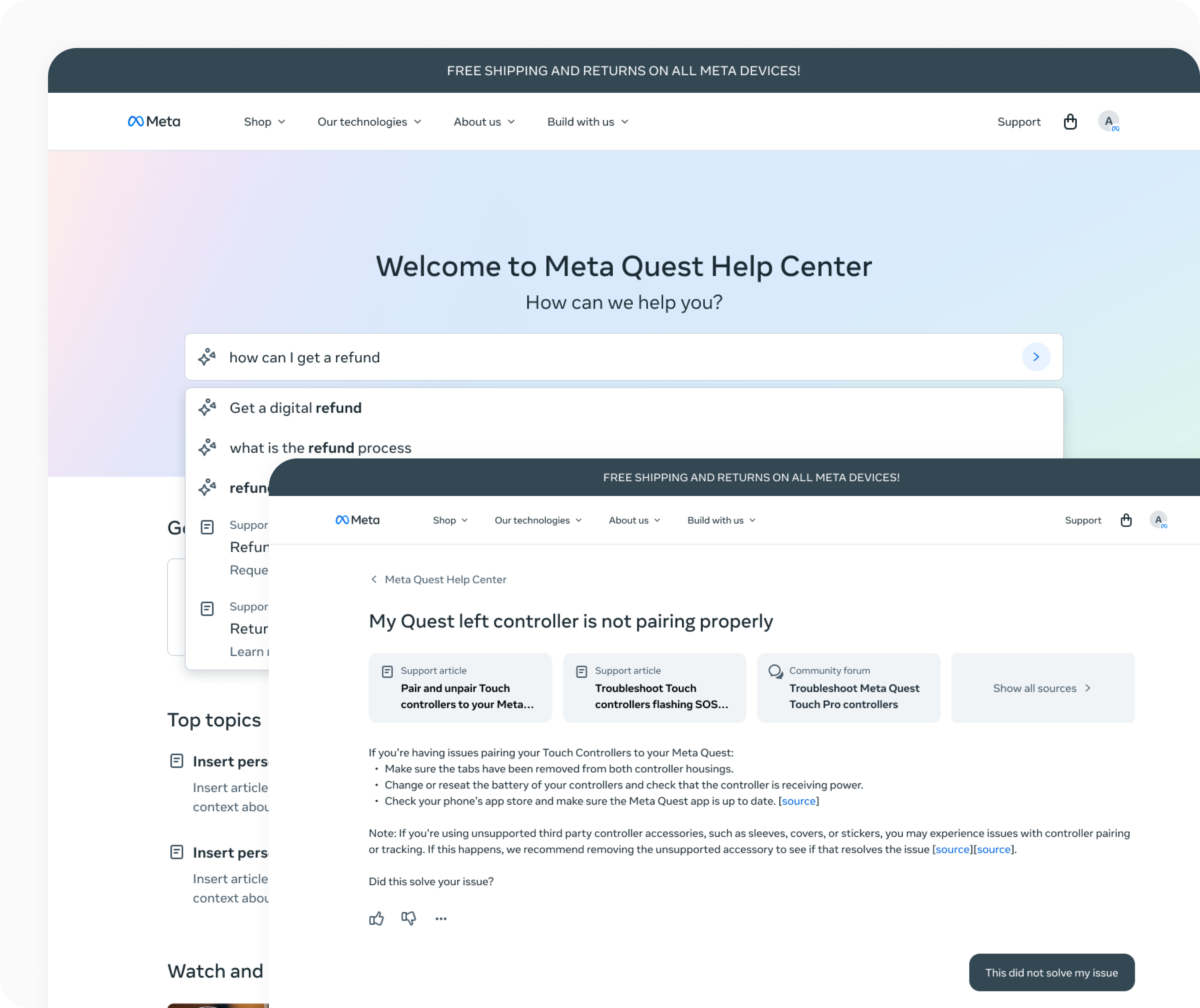
Streamlining support on meta.com
Elevating Meta's Reality Labs support experience to enable customers to get help frictionlessly and boost NPS.
Context
Meta's Reality Labs customer support surfaces see about 5 million monthly unique visits. The post-sales experiences team is responsible for these surfaces (Help Center, support intake flow, meta.com account management pages) and ensuring that customers can get help quickly where needed.
In my time with the team, I led a myriad of new feature developments and improvements across these surfaces to boost NPS and issue resolution rate. The collaboration dynamics were unique, where the product team had to work very closely with the business operations team to align on and execute upon strategic initiatives. The team also lacked dedicated PM support, and as the sole product designer on the team I stepped up to fill in a 'pseudo-PM' role to drive various initiatives.
Approach
The team adopts a rigorous experiment-first approach where the impact of feature enhancements are evaluated via controlled tests and metrics pre-launch. Overall, the product strategy is two-pronged which the team closely executed against:
1. Enhance self-serve capabilities. Users have shown an inherent inclination to self-serve, and self-serve flows have consistently seen the highest NPS results.
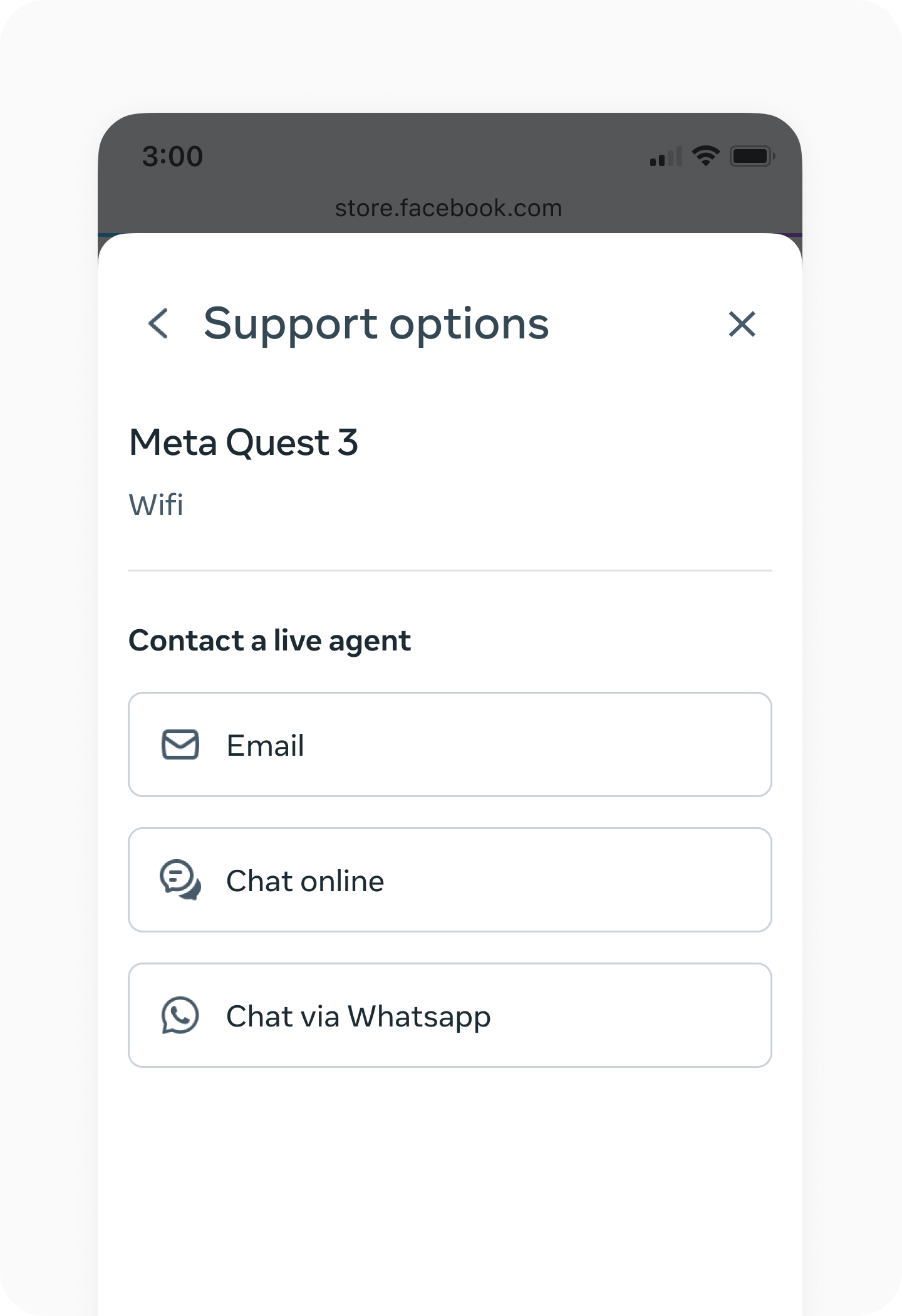
2. Reduce barriers to contacting support. There should be minimal to zero friction between a frustrated user and a human agent.
Solution
I spent 1 half together with the team- during which I proposed, experimented with, and shipped at least 10 feature initiatives across various surfaces. Examples include:
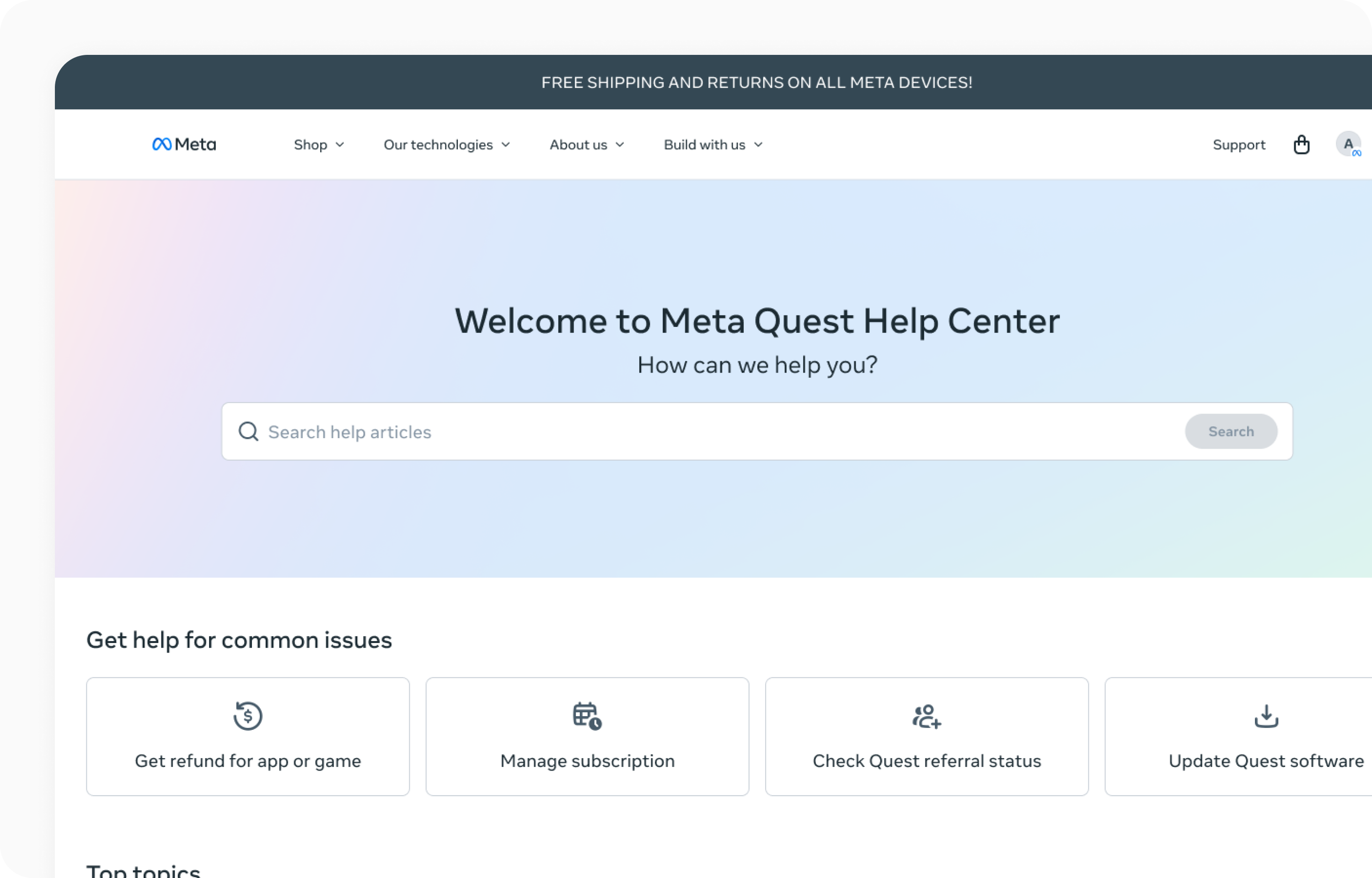
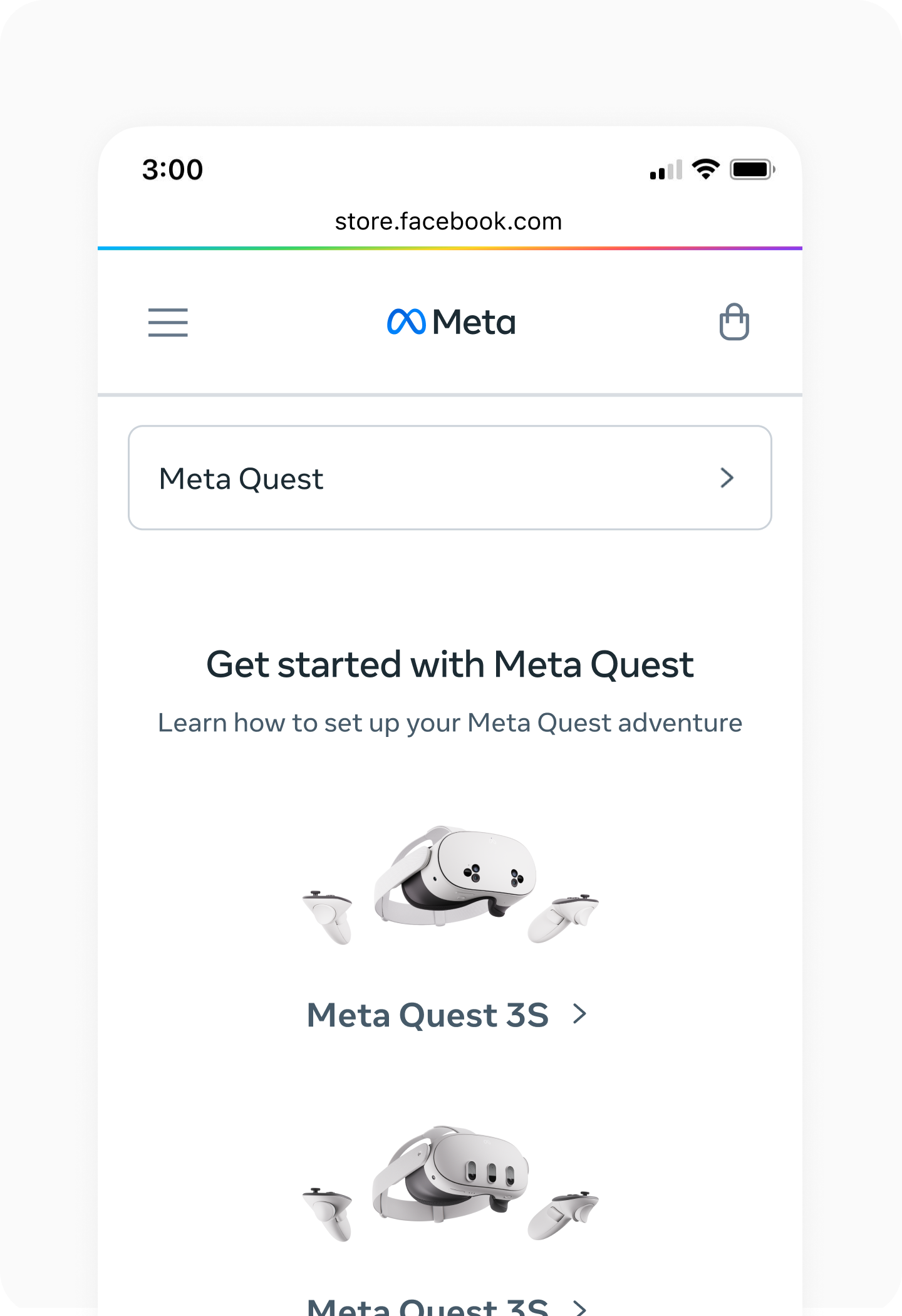
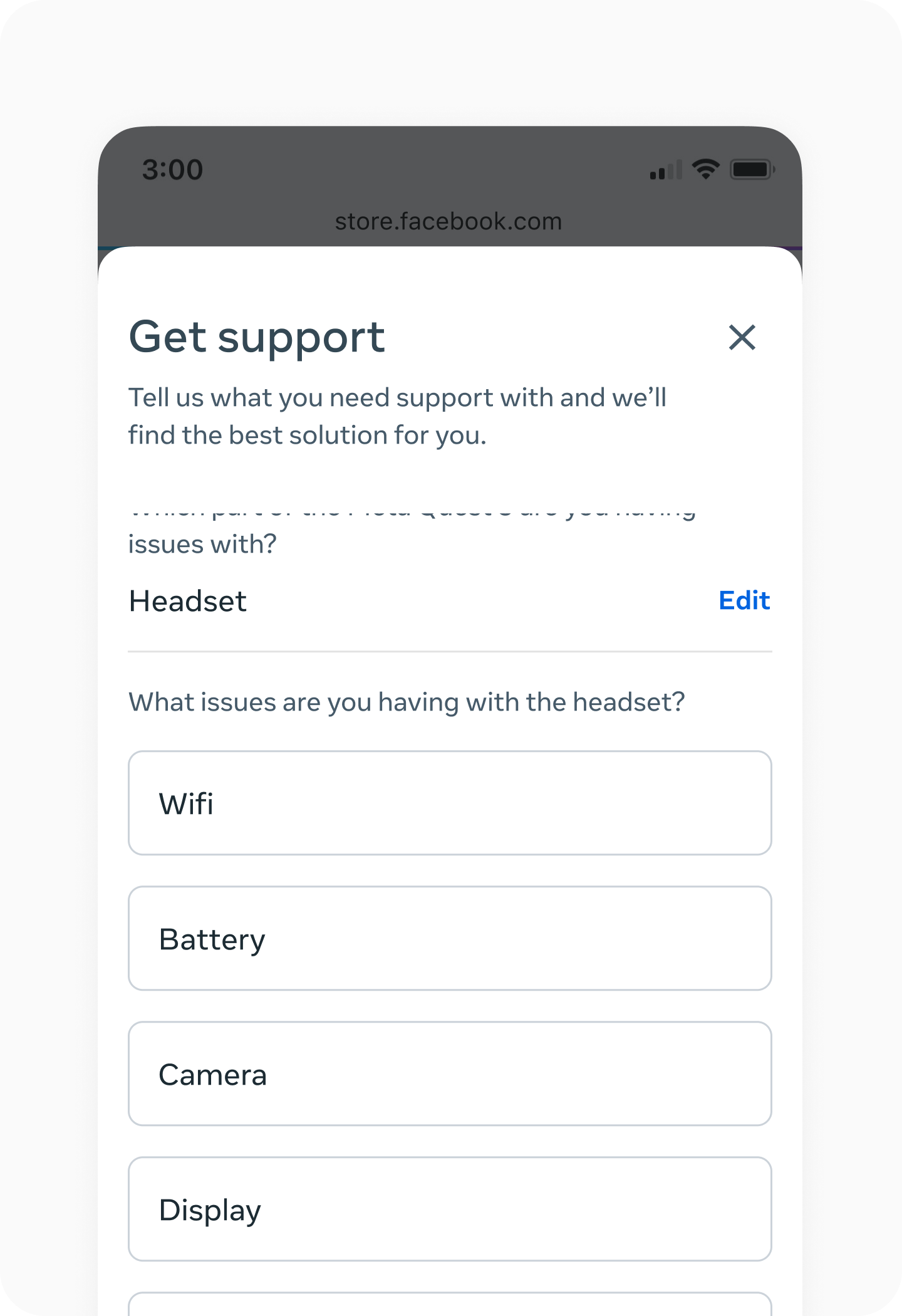
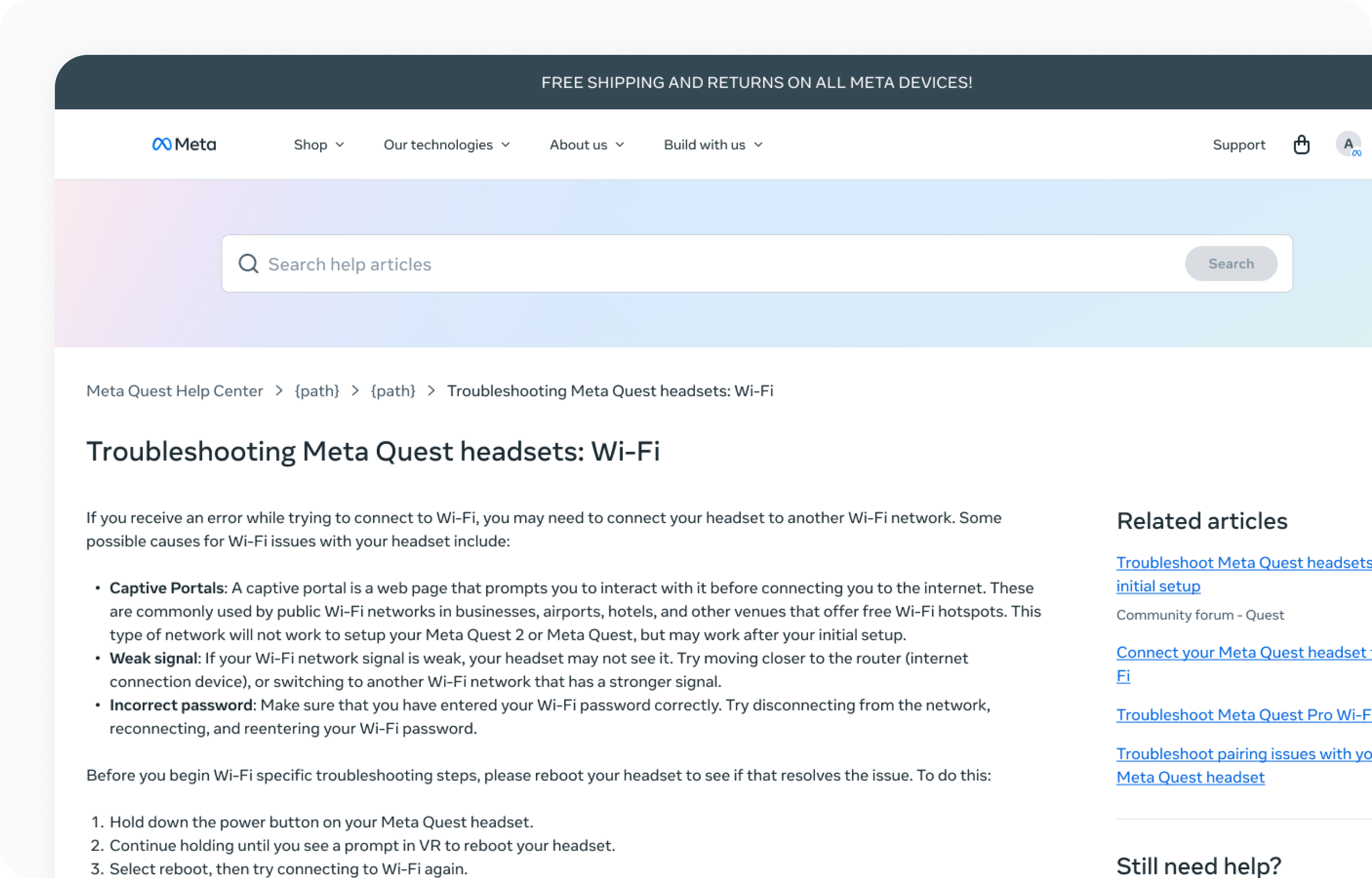
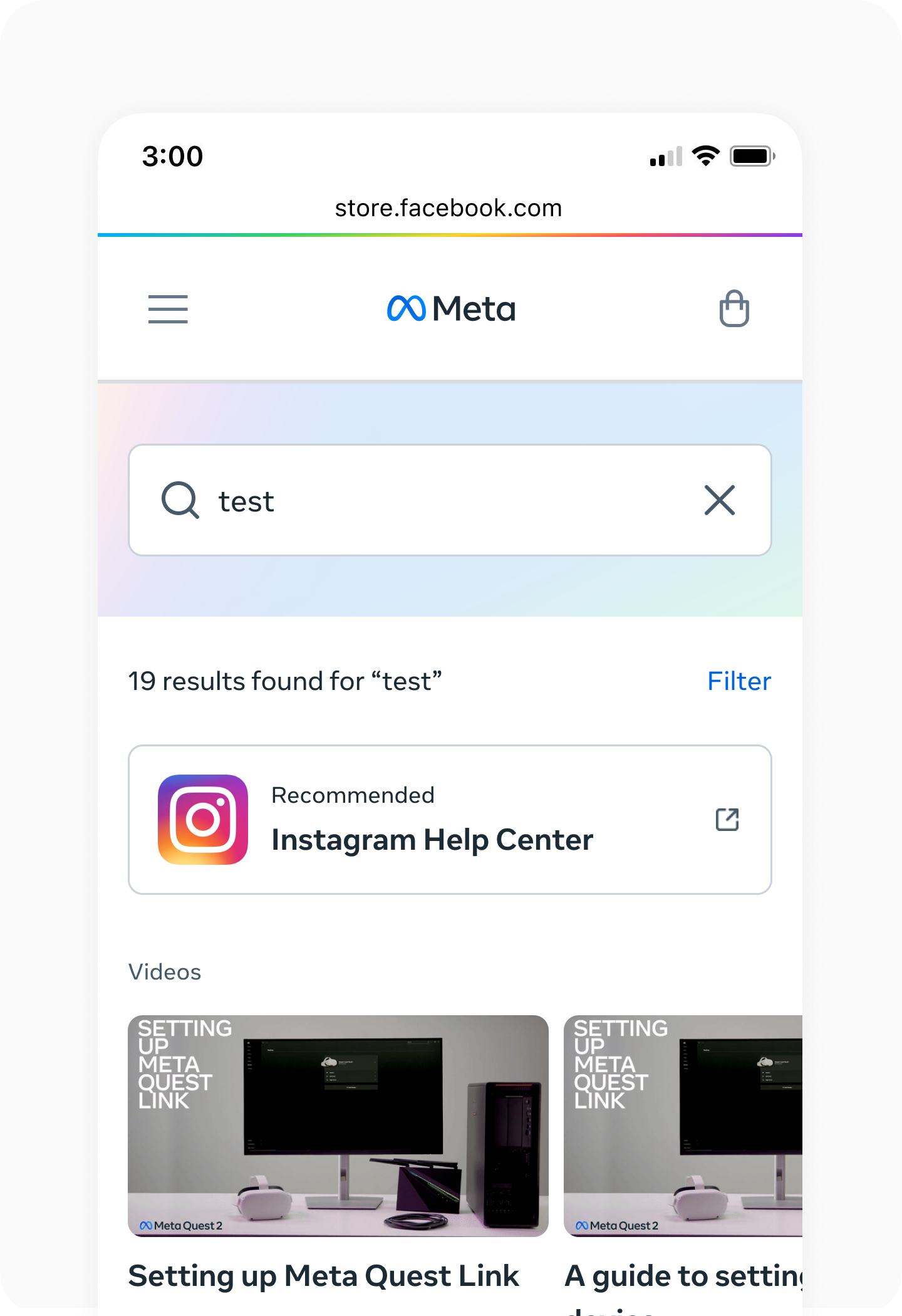
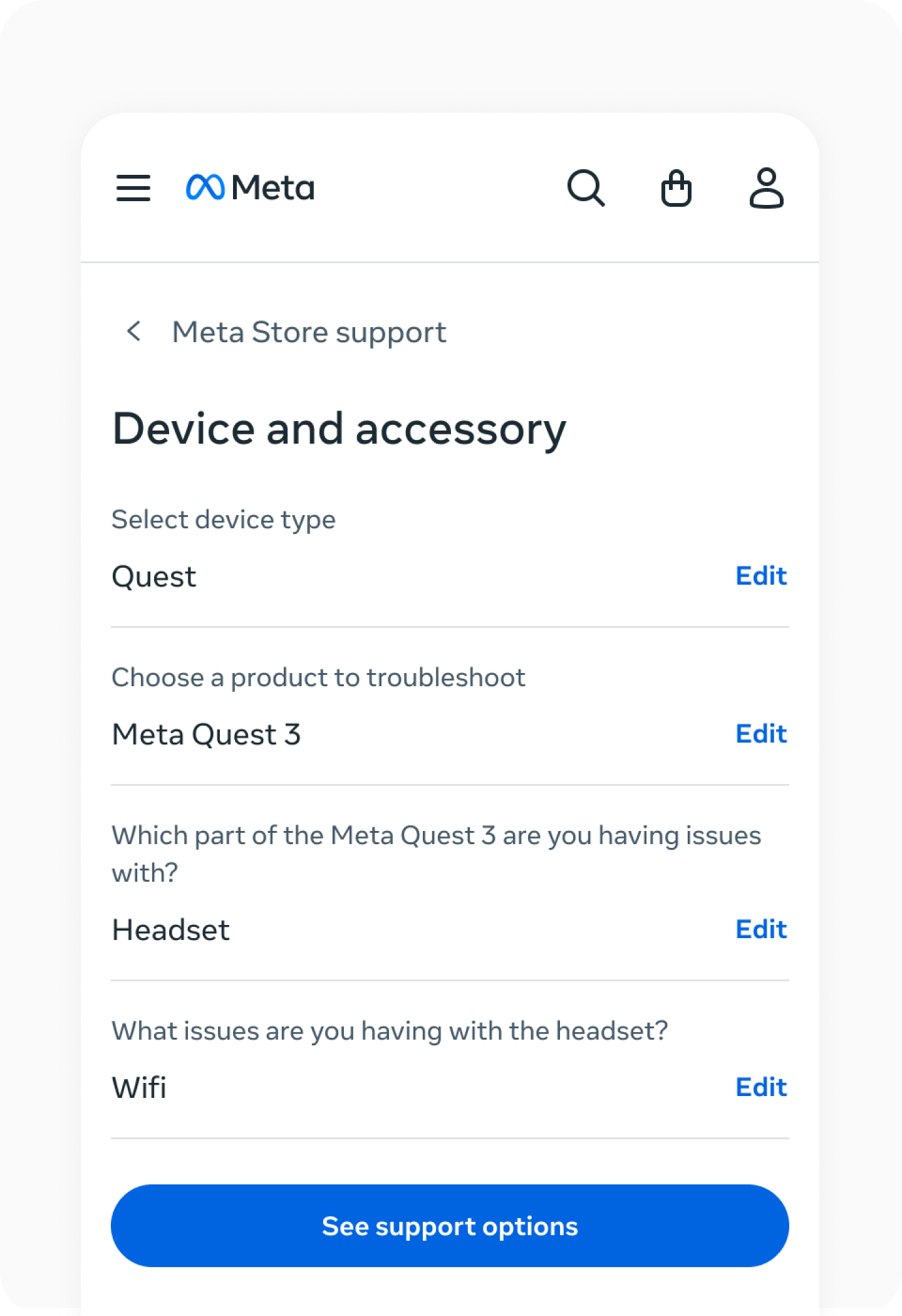
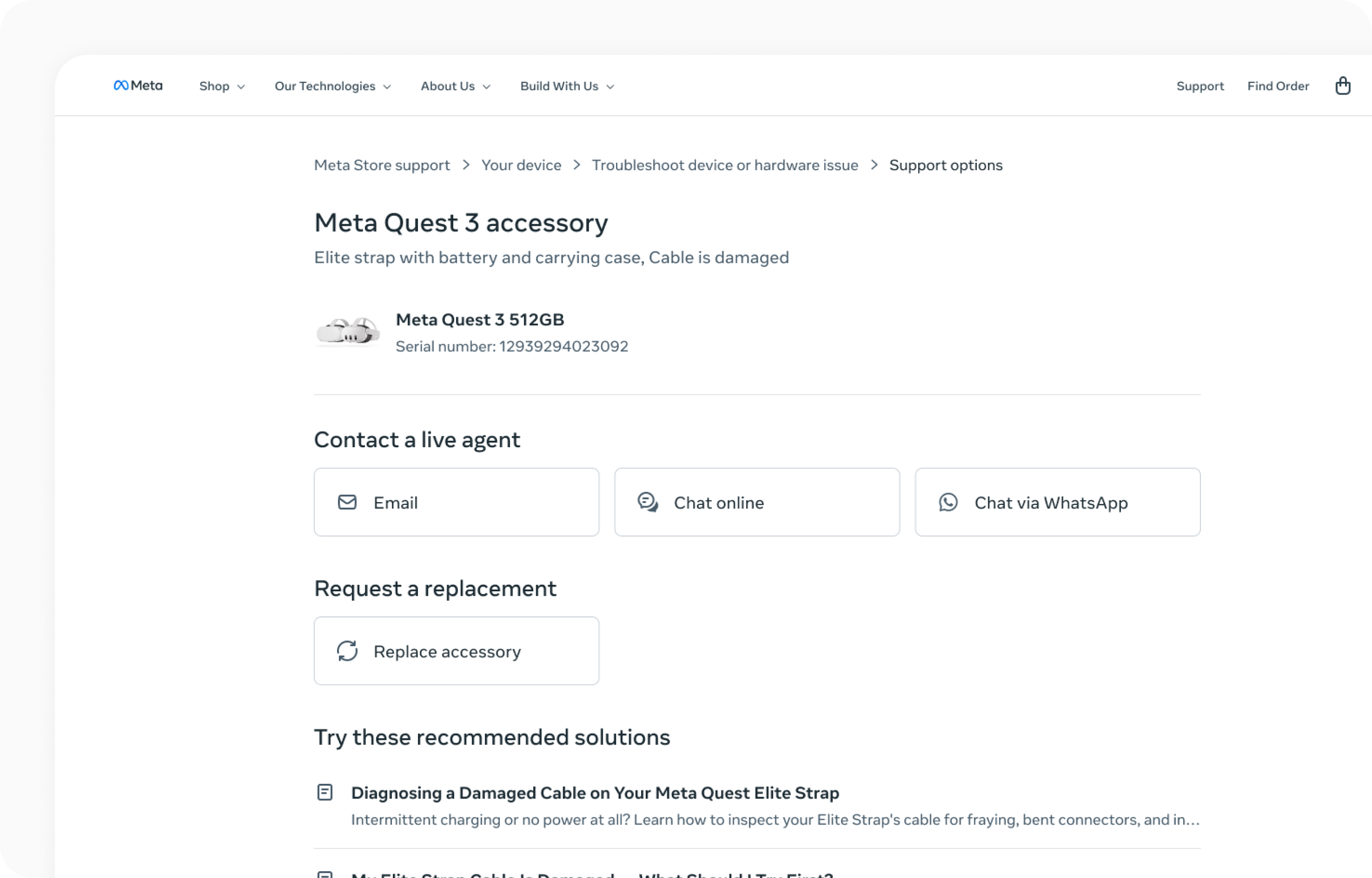
1. Navigation enhancements• Audited the existing Help Center interface and proposed streamlining the tool's information hierarchy for quicker navigation and access to support. Carried out a usability test which successfully validated hypotheses.• Creating mobile-optimized search experiences.• Optimized support intake flow UX where issue triaging is clearly consolidated in a single page.
2. Personalization• Personalized homepage and help article pages based on user profile for more efficient support journeys (e.g. self-serve shortcuts).
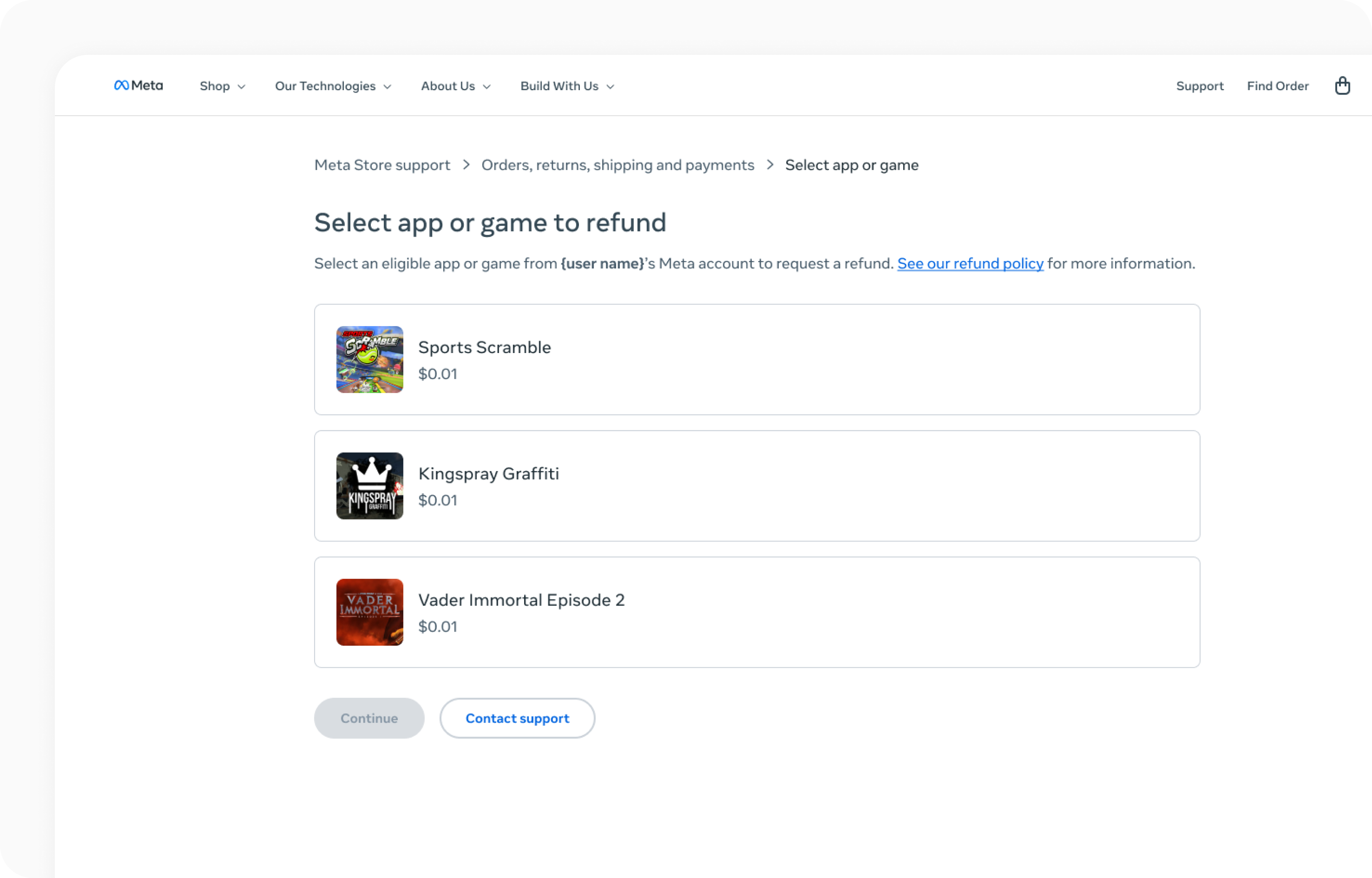
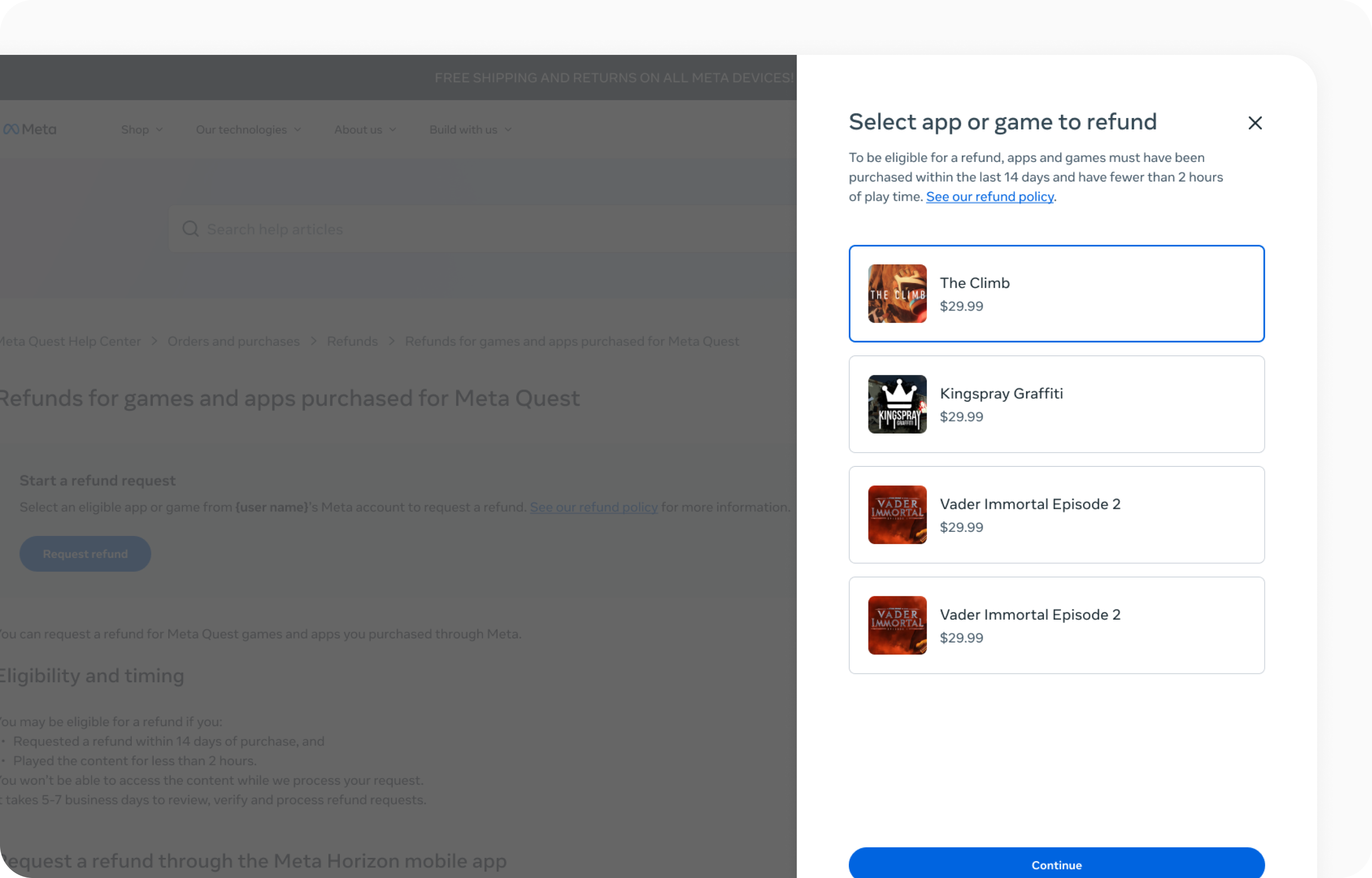
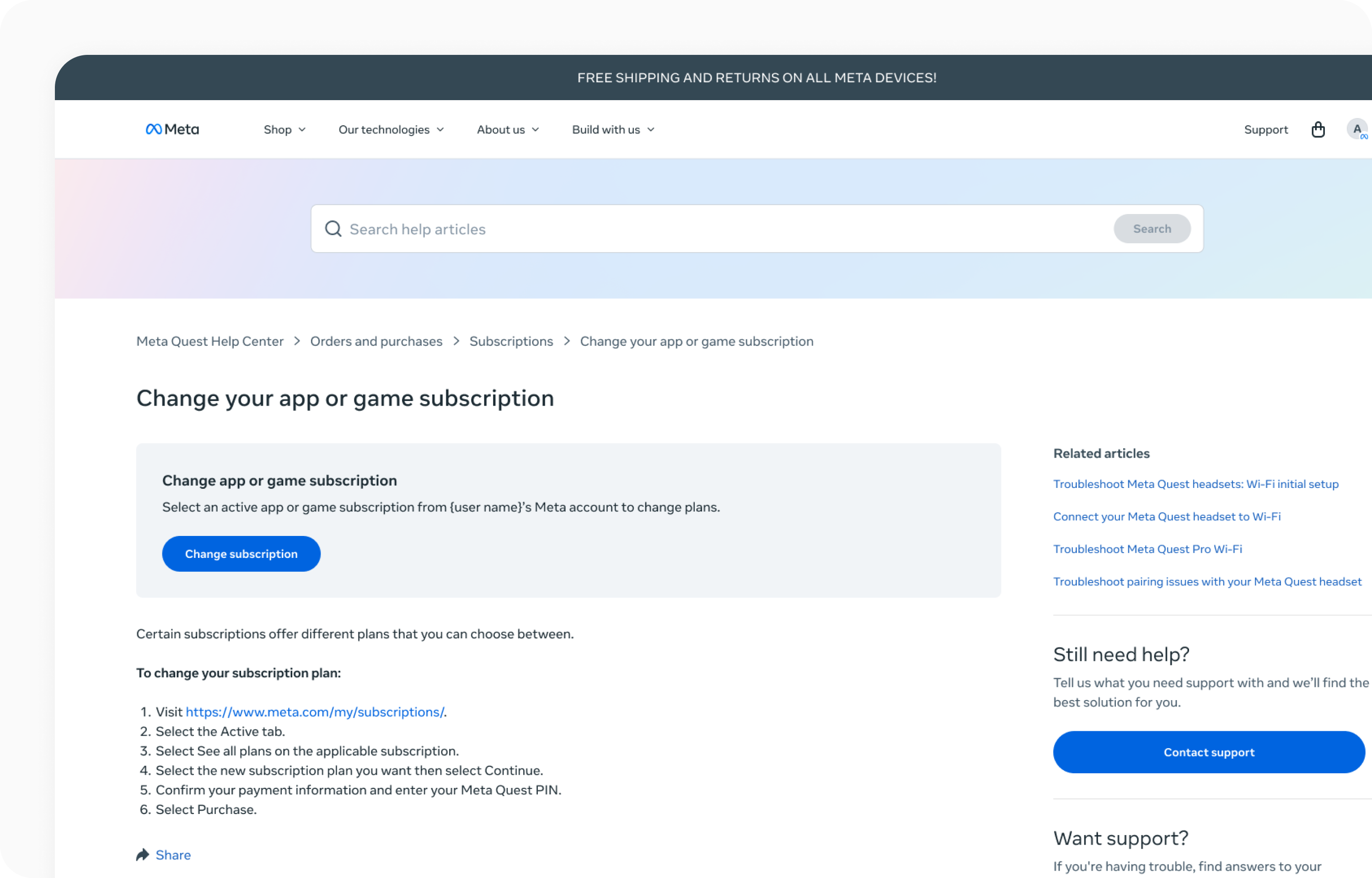
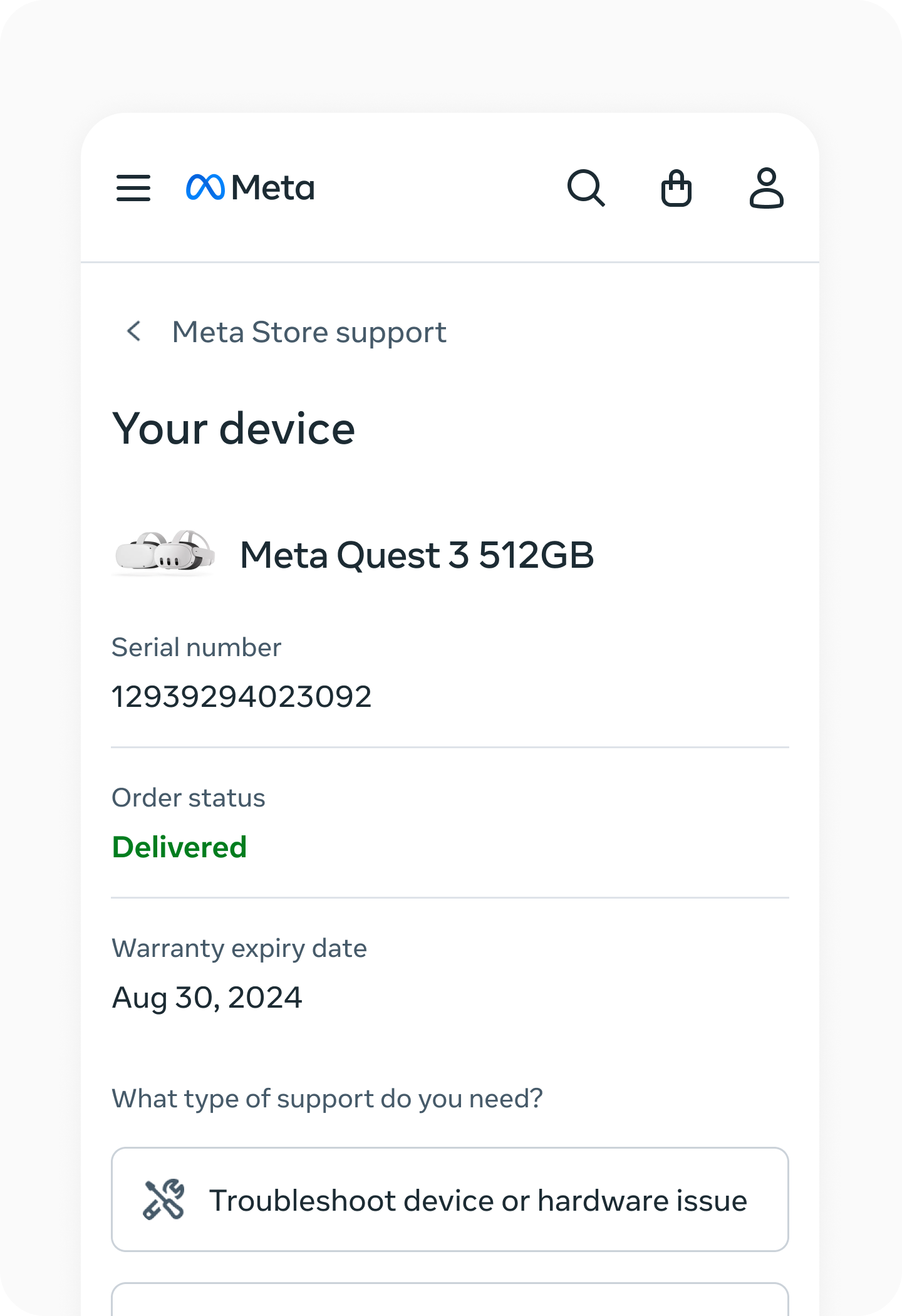
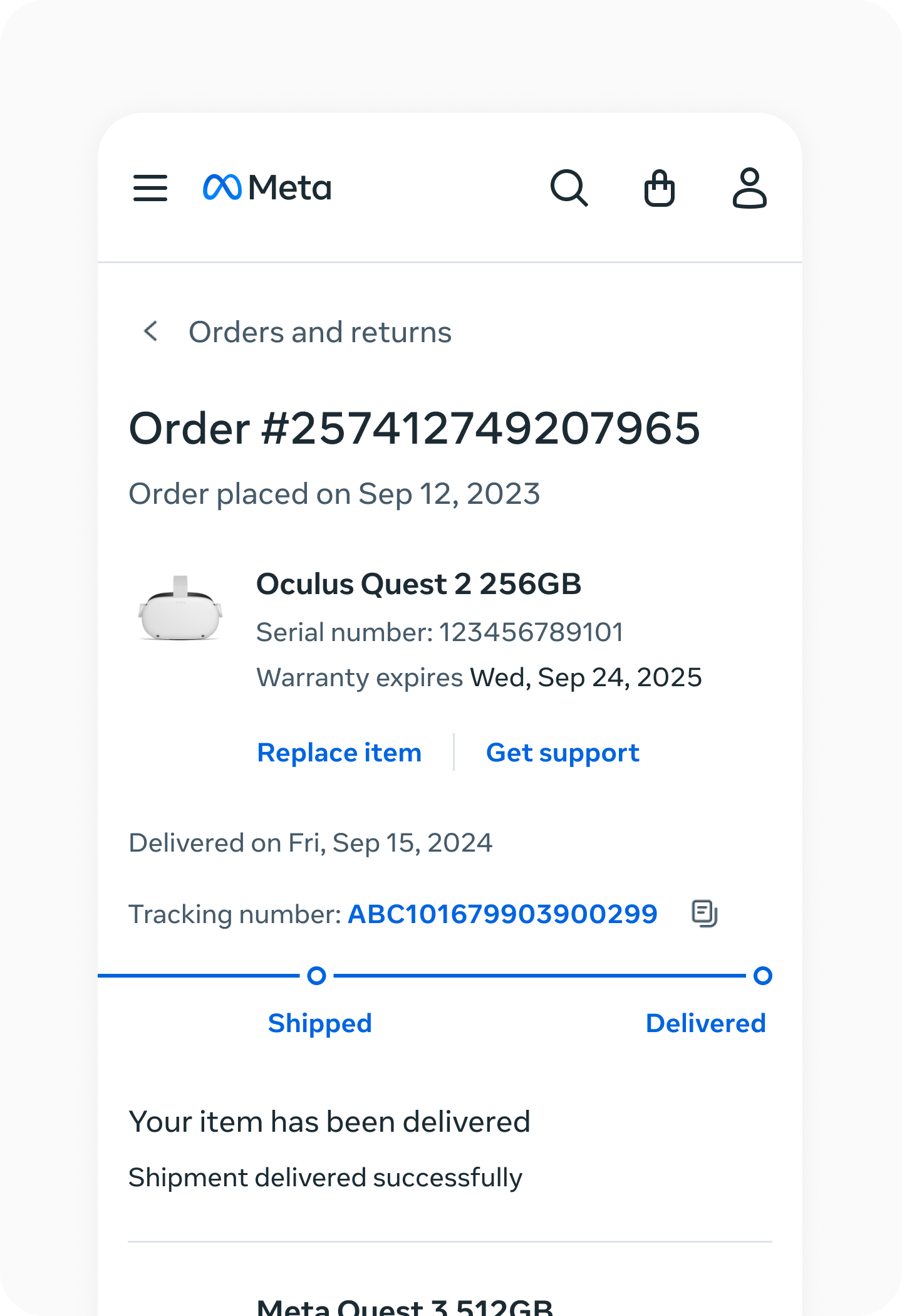
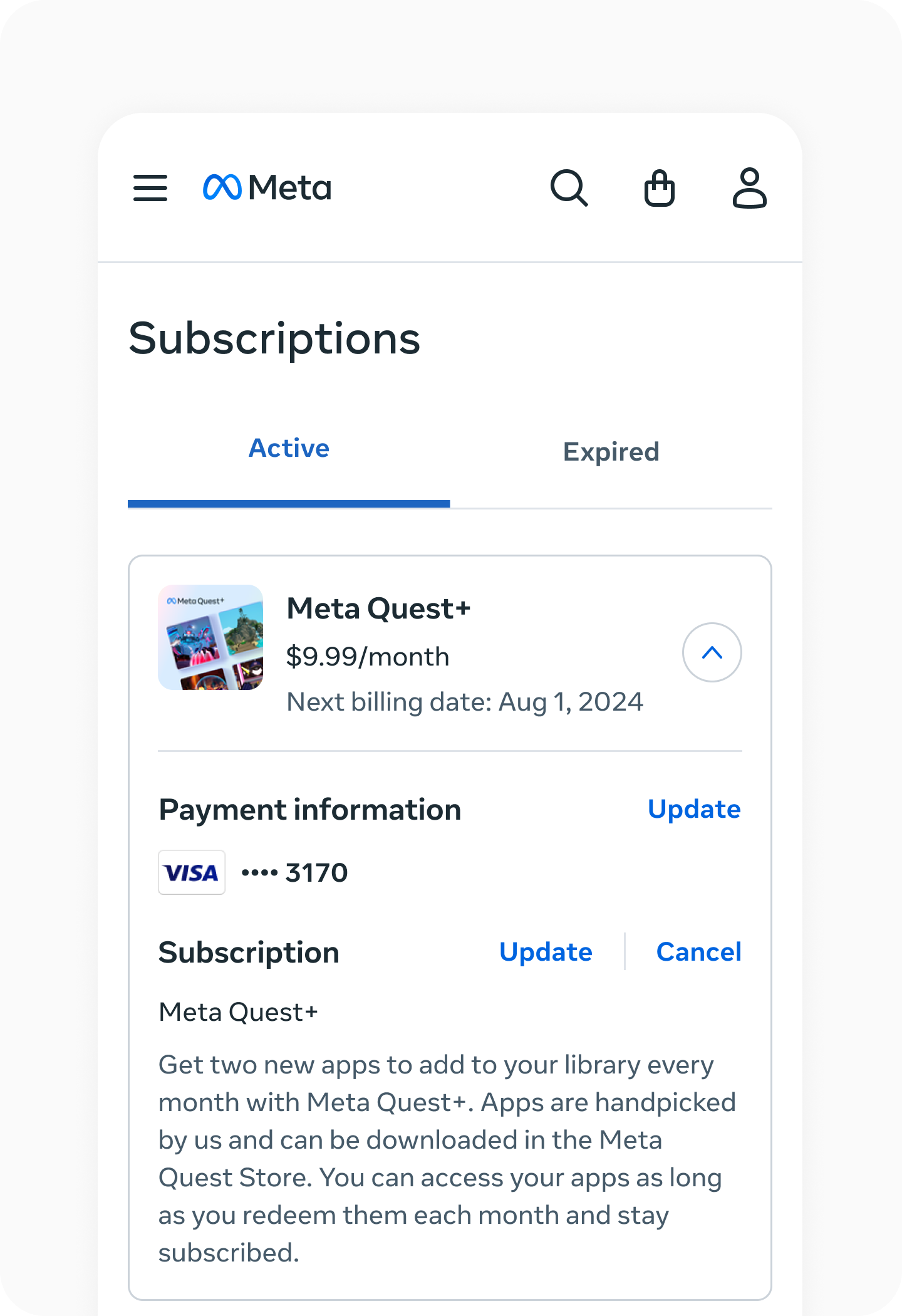
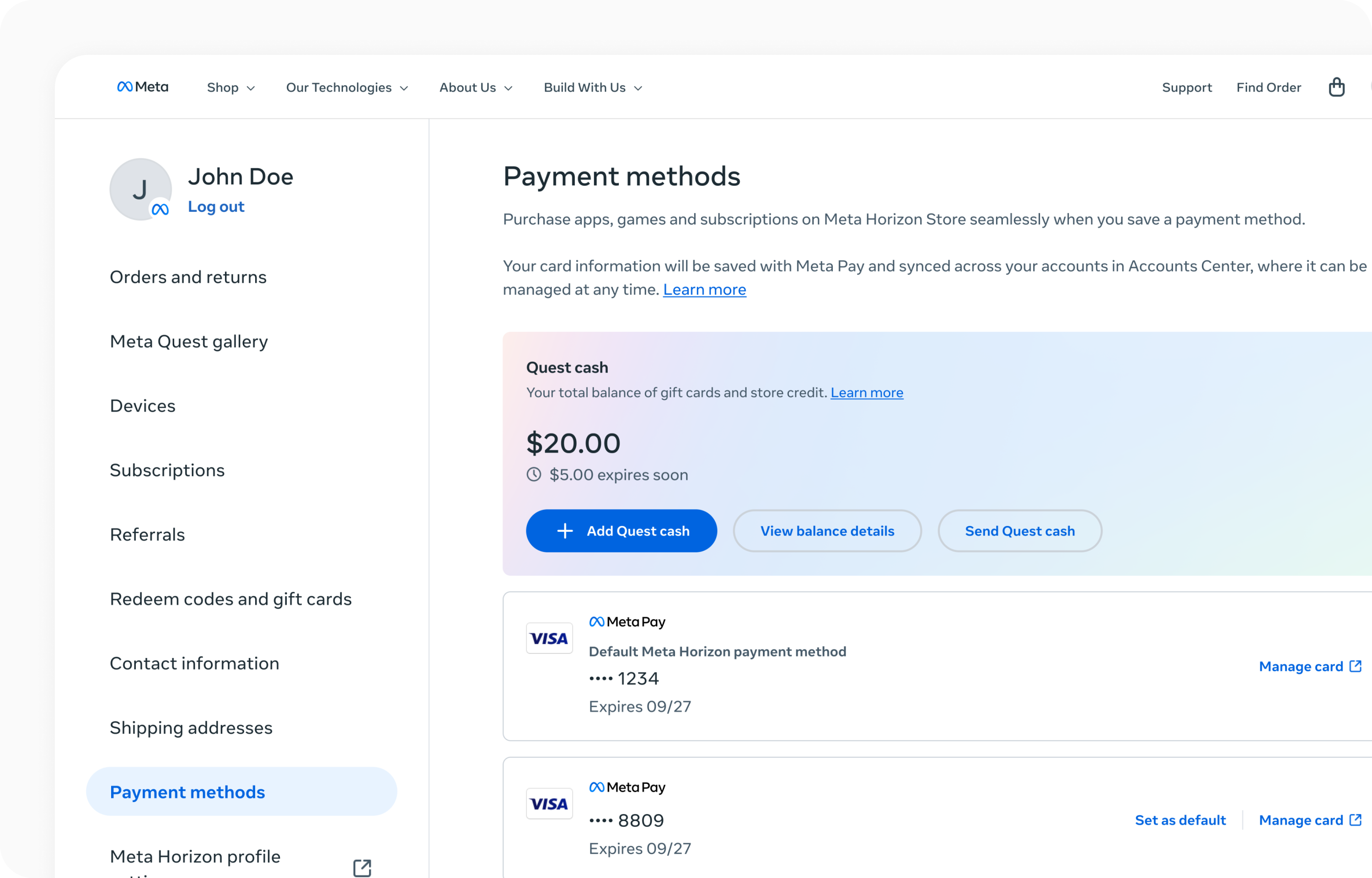
3. Self-serve capabilities• Expand self-serve functionality coverage like refund and subscription management across more product surfaces e.g. help article pages, search, account/order management pages.• Created dedicated tooling for self-serve device management and RMA.• Unlocked digital content redemption and consumption capabilities e.g. gift cards, Quest cash.
Outcome
As a team, we increased NPS by more than 30%, which exceeded the original 2024 NPS goal. This was a significant achievement that provided the team with positive momentum going forward into the new year. Enhancement of digital content functionality like Quest cash management (top ups, refunds) also saw exponential increase in business value created with a projected impact of more than USD$1M per year.
Additionally, I also engaged in vision work to align all XFN partners around a 'customer support agentic vision'- where the customer support experience is envisioned to be one which is made even more seamless with agentic capabilities and increased surface consolidation. This was shared out with product and business teams, and successfully pitched as a unified vision to work towards to.